5 Signs Your Pastry Dough Is Overworked (Checklist)
Pastry dough is forgiving right up to the moment it isn’t. A shortcrust that felt soft and cooperative can turn elastic after one extra pass with the rolling pin; a laminated dough that looked streaky and cool can go waxy under warm hands. The difference between tender and tough is often a minute or two of handling. This checklist is for the baker who wants to catch that moment before it reaches the oven.
Why overworked pastry dough is hard to rescue
Overworking is not only about mixing. It includes rolling, folding, re-rolling scraps, pressing dough into a pan, and letting it warm up on the bench. In shortcrust and tart dough, extra handling develops gluten, which makes pastry elastic and inclined to shrink. In laminated dough, warmth and pressure smear the butter into the flour instead of leaving it in distinct layers. Both problems show up as texture. The dough may look fine at first, then fight you at the rolling pin or bake up compact and bready. Once gluten is tight or butter is fully blended, you can improve the dough with a rest, but you cannot fully reverse the damage. The goal is to spot the signs early.
Sign 1: The dough fights back
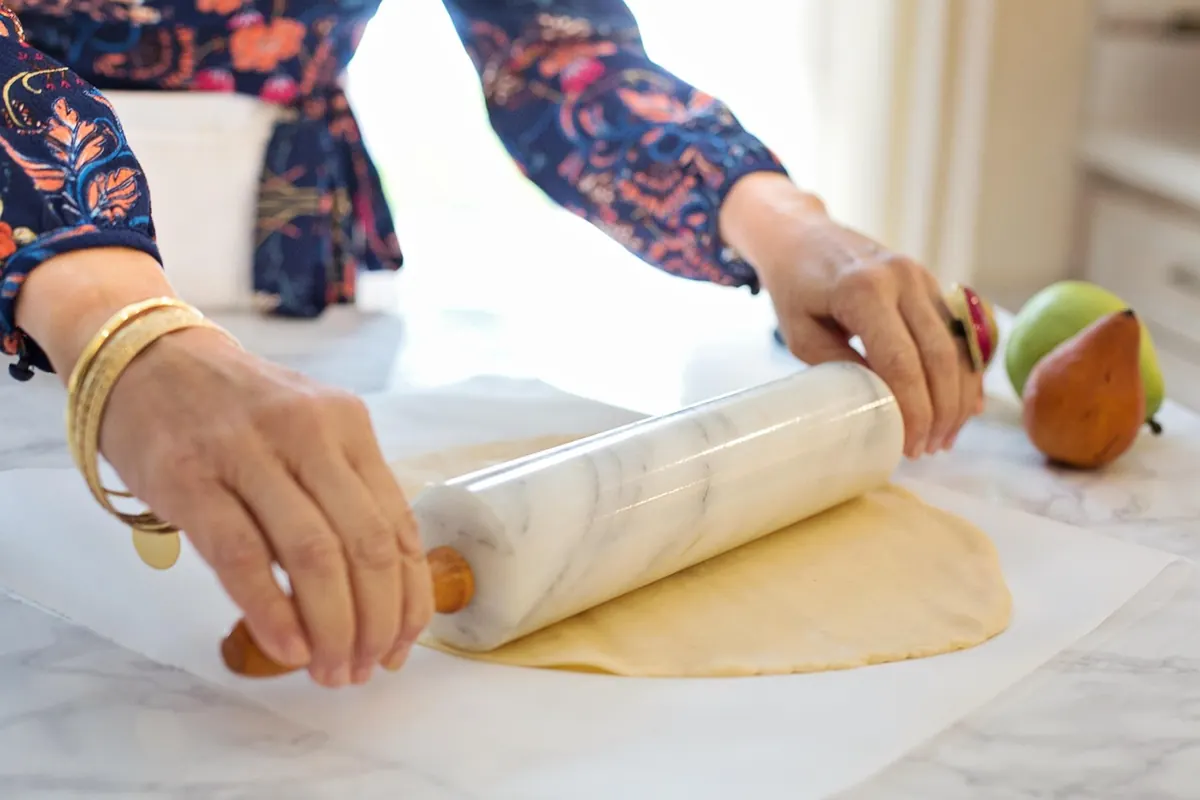
A well-made pastry dough should feel relaxed when you roll it. It may resist a little at first, especially if it has been chilled, but it should not spring back like a rubber band. Press a thumb into the dough. If the indentation fills in quickly, the gluten is tight. Roll a small piece and watch the edges: if they pull inward or the dough shrinks on the bench, stop.
What to do
Wrap the dough and chill it for 20 to 30 minutes. Cold relaxes gluten and firms butter, making the dough easier to roll without stretching. Then roll with light, even pressure from the center outward. Do not press down hard and do not keep rolling back and forth over the same spot. If the dough still snaps back after a proper rest, it was likely overworked; use it for a rustic tart or a press-in crust where perfect shrinkage control matters less.
Sign 2: Smooth surface, ragged edges
Overworked dough can look deceptively good in the bowl. The surface may be smooth and satiny, almost polished. The trouble appears at the edges. As you roll, the perimeter tears, cracks, or looks jagged instead of clean. The dough may also feel tight under the pin, like it is stretched rather than eased.
Before blaming overworking, check for dryness. A dough that cracks when you bend it may simply need a few drops of water or a short rest. Overworked dough, by contrast, tears because the gluten is tight and the fat is no longer lubricating the layers. Do not fix it by adding flour; that makes the dough drier and more likely to crack. Brush off loose flour, fold the dough gently onto itself, and let it rest. When you roll again, use a bench scraper to lift and turn the dough rather than dragging it across the bench.
Sign 3: The butter disappears
For rough puff, laminated pastry, and many enriched pastry doughs, visible butter is a good sign. You want distinct streaks, patches, or small flattened pieces, not a uniform beige paste. If the dough turns waxy, greasy, or completely even in color, the butter has been smeared into the flour. The layers are gone before baking even begins.
What it looks like at the bench
- The dough feels slick rather than cool and firm.
- Butter streaks vanish after a fold.
- The surface looks smooth but heavy, with no visible layering.
- Flour on the bench absorbs grease quickly.
Warm hands and a warm room are usually the culprits. Chill the dough, the rolling pin, and the bench scraper if needed. Work in short bursts and return the dough to the fridge before it softens. If the butter is already fully blended, the pastry will still bake, but expect a shorter, less flaky texture. Use it for a galette or a rough tart rather than a recipe that depends on dramatic layers.
Sign 4: The dough shrinks in the pan
Shrinkage is one of the clearest signs of tight gluten. You line a tart pan, trim the edge, and within minutes the dough pulls away from the sides. In the oven, it shrinks further and slides down the pan. The finished shell is smaller than it should be, with a thick rim that has pulled inward.
Some shrinkage is normal, but overworked dough shrinks more and resists correction. When lining a pan, ease the dough into the corners instead of stretching it. Lift and press gently; do not pull. Chill the lined shell for at least 20 minutes before baking. If you notice the dough pulling back immediately, it needs rest. Slide it onto a tray, cover it, and refrigerate. For a tart shell, you can also press the dough in rather than rolling and lifting it, which puts less tension on the gluten.
Sign 5: The baked texture is tough, bready, or compact
The final proof is on the plate. Proper pastry should be crisp, tender, and flaky. Overworked pastry is often chewy, tough, or bready, with a compact crumb and little separation between layers. A shortcrust may taste like a firm cookie rather than a delicate shell. A laminated pastry may bake up dense and heavy, with layers that fuse into one mass.
This is the hardest sign to fix because it appears after baking. But it is useful feedback for the next batch. If the texture is consistently tough, look at your handling: how long you mixed, how warm the dough became, how many times you re-rolled scraps, and whether you rested the dough before baking. Small changes add up. Stop mixing when the dough is shaggy, chill before rolling, use a light hand, and re-roll scraps only once.
The five-point checklist
Use this quick checklist before the dough goes into the oven. If you spot two or more signs, stop handling and give the dough a rest.
- Spring-back test: Press the dough; if the indent fills in fast, it is tight.
- Edge test: Roll a small piece; if the edges tear or pull inward, stop.
- Butter test: Look for streaks; if the dough is uniform and waxy, the fat has smeared.
- Pan test: If the dough pulls away from the sides, chill it before baking.
- Bake test: If the last batch was tough or bready, reduce handling next time.
If the dough is already overworked, do not keep rolling in the hope that it will improve. Chill it, shape it simply, and accept a rustic result. A free-form galette, a press-in tart, or a batch of rough pastry crackers can still be good. The point is to stop the damage from getting worse.
Practice the pause
Tender pastry is less about secret ingredients and more about knowing when to stop. Mix until the dough is shaggy, then bring it together with a few gentle folds. Chill before rolling. Roll with light pressure and turn the dough often. Rest it whenever it fights back. Those small pauses feel slow, but they protect the texture you are trying to create. The next time your dough feels tight, looks waxy, or shrinks in the pan, treat it as a signal rather than a failure. Put it in the fridge, wash your hands, and come back with a lighter touch.
Photo: JillWellington / Pixabay