How to Store Artisan Bread So It Stays Crusty for 3 Days
There is a particular disappointment in a loaf that starts so well. You cut into it warm, the crust shatters under the knife, and the crumb is open and fragrant. Two days later the same bread is leathery at the cut end and tastes like cardboard. Nothing went wrong in the baking — the trouble started the moment the loaf cooled on the rack and met the air in your kitchen. Bread has no preservatives beyond salt, acid and a well-built dough, so storage is the whole game after the oven door closes.
What follows is the routine used for country sourdough, baguettes, rye tins and enriched rolls alike. It is not complicated, and most of it takes less effort than wrapping a present.
What Is Actually Happening Inside the Loaf
Two processes fight against you. The first is staling: starch crystals that were soft and swollen after baking gradually firm up again, which is why a two-day-old crumb feels dry even when it is technically still moist. The second is moisture migration — water leaves the crumb and moves outward, softening the crust while the interior dries. Warmth speeds the first process; dry air speeds the second.
This is why the usual advice is contradictory. A tight plastic bag keeps the crumb soft but turns a crisp crust into a chewy one within hours. An open paper bag preserves the crust and dries the bread out by the next morning. The trick is not choosing one or the other but changing your approach as the loaf ages, and accepting that day-three bread is for toasting, not for tearing by hand.
Paper, Cloth, Plastic: Choosing the Right Wrap
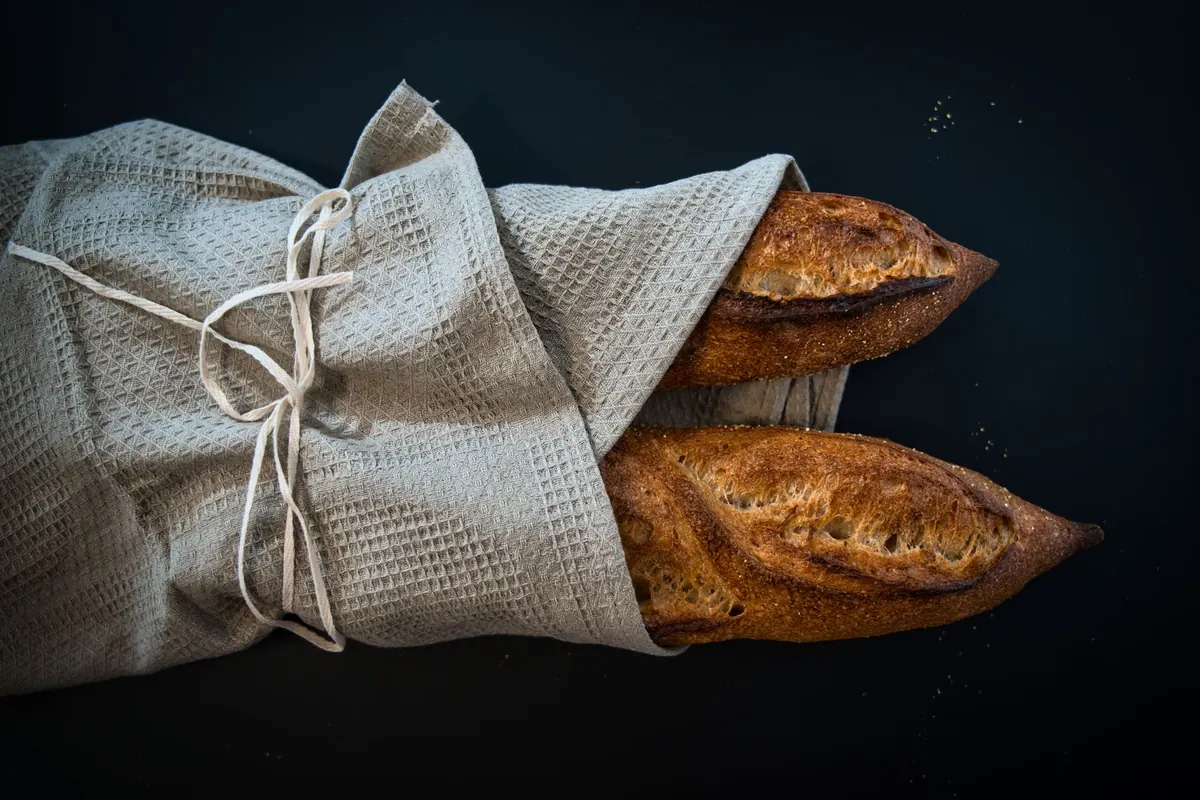
For the first twenty-four hours, a lean crusty loaf wants air but not a draught. A plain paper bakery bag, folded shut at the top, is close to ideal. Stand it upright in a cool corner, away from the kettle and the oven. If you have a linen cloth, wrap the loaf loosely in that instead: the fabric breathes and holds just enough humidity to keep the crust from turning brittle.
The hybrid wrap that suits most loaves
Put the loaf in a paper bag, then place the bag inside a cotton tote or a clean tea towel and leave the whole thing on the counter. The paper manages the crust, the cloth buffers the room's dry air. It looks slightly improvised and works better than most purpose-made boxes.
When plastic helps
Plastic is not the enemy — it is simply the wrong tool for a crusty boule. Use a zip bag or a lidded container for soft, enriched breads, sandwich tins and rolls, where a yielding crust is what you want. For a crusty loaf that has already lost its crackle, a plastic bag overnight will soften the outside and make it sliceable again, which is sometimes exactly the point.
Bread boxes
A wooden bread box with a few ventilation holes is a genuinely good home for a loaf, provided you keep it clean and dry. Empty the crumbs every couple of days. Never store bread in the box alongside onions, garlic or cheese — the bread picks up their smells within a day.
Slice as You Go, and Keep the Cut Face Down
Every slice you take exposes fresh crumb to the air, and the cut face dries first and fastest. Two habits make a real difference:
- Slice only what you are about to eat, then press the cut face of the loaf flat against a wooden board or the paper bag. The board starves that surface of airflow.
- If you must pre-slice a whole loaf — for a lunchbox, say — freeze the slices immediately, still separated, rather than leaving them in a stack on the counter.
The heel, that unloved end slice, is useful. Leave it attached until the loaf is nearly gone; it protects the crumb behind it. If you have cut the loaf from both ends, place a heel over each exposed face like a lid.
Freezing Is the Only Honest Long-Term Option
Freezing stops staling almost entirely, and a well-wrapped loaf comes back close to fresh. Cold, dry freezer air is the enemy here, so wrap generously. This is the method that gives the most consistent results:
- Let the loaf cool completely. Warm bread in a freezer produces condensation, and that means a soggy crust later.
- Wrap the whole loaf tightly in a layer of paper or cling film, then a second layer of foil or a heavy freezer bag, pressing out as much air as you can.
- Freeze whole if you will use it within a month, or slice first and pack the slices in portions you can thaw in one go.
- Thaw at room temperature, still wrapped, for three or four hours. Unwrap only when the loaf is fully defrosted, then refresh it in the oven.
Slices can go straight from the freezer into a toaster, no thawing needed. That single trick is the reason it is worth slicing a loaf before freezing it rather than after.
Reheating: Bring the Crust Back
A dry loaf cannot be rehydrated from the outside, but a crust can be re-crisped beautifully. Heat the oven to about 200°C, splash the crust lightly with water — a few wet fingers are enough — and bake the loaf directly on the rack or a stone for eight to twelve minutes. Then, and this matters, rest it on a cooling rack for ten minutes before cutting. The interior is still catching up with the crust, and slicing too soon gives you a gummy crumb.
For single slices, a hot dry skillet does a fine job in ninety seconds a side, and a toaster is quicker still. The microwave will soften a rock-hard slice in ten seconds but leaves it rubbery; if you use it, follow with a minute in the pan to bring the surface back.
Five Habits That Quietly Ruin Good Bread
- Refrigerating it. Cold accelerates staling, and a fridge is the worst place for any loaf except one destined for the toaster.
- Bagging it while still warm. The trapped steam softens the crust irreversibly and can encourage mould.
- Storing it on top of the fridge or beside the stove, where warmth and draughts do their worst.
- Cutting with a dull knife, which compresses the crumb and crushes the crust at every slice.
- Leaving a cut loaf face-up overnight, which dries the crumb a full day earlier than necessary.
A Simple Three-Day Plan
Day one: cool the loaf fully on a rack, then keep it in a paper bag or a linen cloth on the counter, cut face down, and enjoy it as it is. Day two: move it into a cloth inside a bag, or refresh the whole loaf in a hot oven for eight minutes before serving — it will come close to day one. Day three: slice and toast, fry in olive oil, or turn it into croutons and panzanella, because by now the crumb is firm and the crust is best revived by heat. Anything you won't finish by then should have gone into the freezer on day one or two, wrapped tightly, while it was still worth saving.
Bread is a living thing for about a day and a good ingredient for two more. Treat storage as part of the baking, and the third morning's toast will taste like a decision you made well rather than a race you lost.
Photo: Travel with Lenses / Pexels